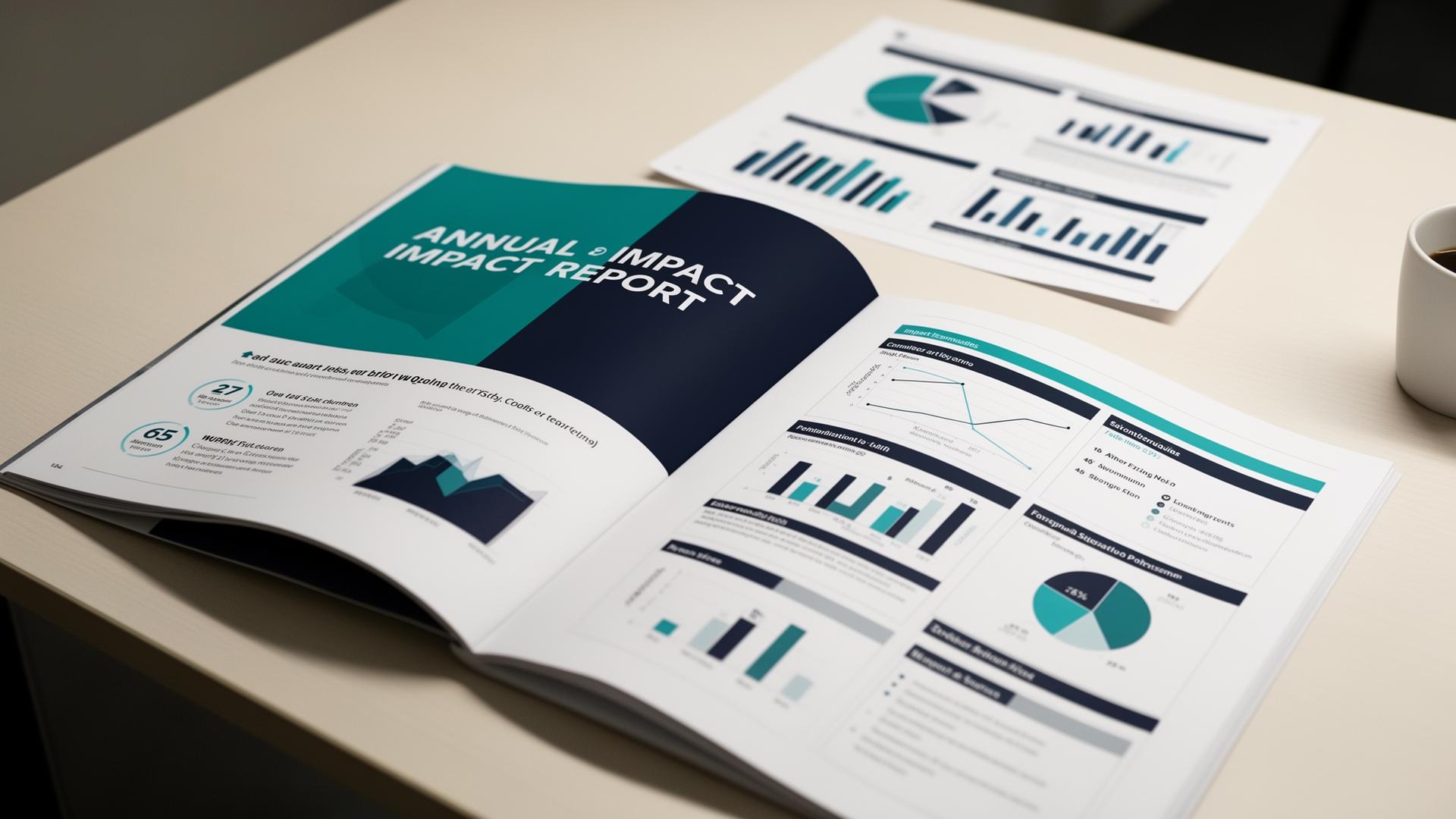
Donors have more choices than ever. The organisations that build lasting relationships do not just do good work, they show their work clearly. Transparent reporting is not about presenting perfect results. It is honest, consistent communication that reassures a donor their contribution is making a measurable difference, and reduces the odds they quietly move their support elsewhere.
Financial Clarity
Show exactly where the money goes. Aim for 70 to 85% on program expenses, be ready to explain why administrative costs are necessary, keep fundraising expenses under roughly 25%, and explain your reserve and sustainability plan rather than leaving it unstated.
Example. "Of every $100 donated in 2024, $78 funded direct programs, $15 covered essential operations including office, insurance and audits, and $7 supported fundraising to grow our impact."
Impact Specificity
Avoid vague claims. Use concrete, verifiable numbers.
Vague. "Helped many families." Specific. "Provided clean water to 847 families, 3,291 people, across 12 villages."
Vague. "Improved education outcomes." Specific. "Increased literacy rates from 34% to 67% among 156 participating children over 18 months."
Acknowledge the Challenges
Donors know aid work is complex. Sharing obstacles, weather or logistics delays, rising supply costs, the lessons learned along the way, builds more credibility than a report where nothing ever goes wrong.
Show Where You Are Going
Set out your goals for the next 12 months, how current donations enable that work, and any planned expansion. A donor who can see the plan is more likely to still be a donor next year.
Getting the Cadence Right
Quarterly updates beat an annual report that arrives too late to feel current. Keep each one short and consistent rather than perfect, a clear financial breakdown, a specific impact number, one challenge, and a plan for what is next, sent on a rhythm donors can rely on. An annual report can go deeper, with an executive summary, a financial overview, program results, a beneficiary story, and a personalised thank-you, but the quarterly cadence is what actually builds trust between the big reports.
The most common mistake is not too little transparency, it is drowning donors in internal bureaucracy and irrelevant statistics instead of the handful of numbers that actually tell the story.
Where to Start
Pick three to five key metrics, set up basic data collection, and draft your first transparency statement and financial breakdown. Send it, gather feedback, and set a date for the next one. Consistent honest updates beat one elaborate report that never goes out.
If reporting itself is the bottleneck rather than the message, our guide to automating donor and impact reporting covers how to build the numbers into a system that produces them for you, rather than a scramble every quarter.
Tags
Related Resources
AllyGPT - AI Assistant
Your AI ally for humanitarian work
Marketing & Fundraising Services
Reach more supporters and secure sustainable funding
Keep reading
Official Resources
About the author
Synergaid Team supports humanitarian organisations with practical systems, clear processes and honest advice.